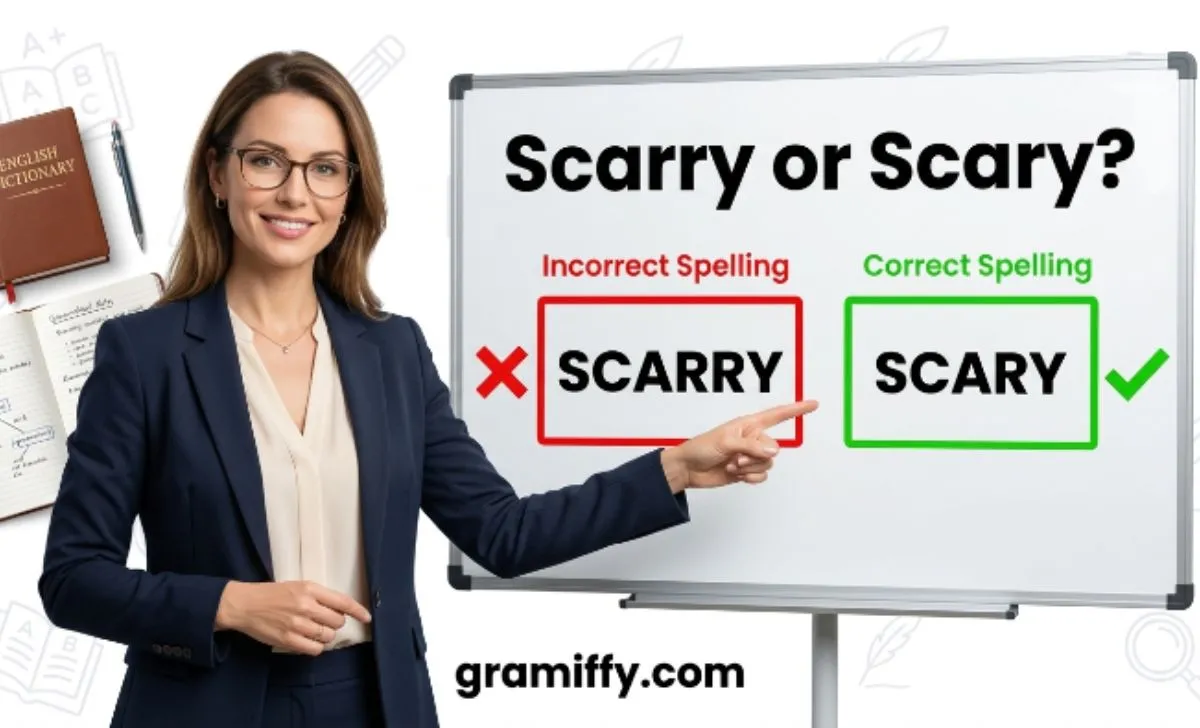
English spelling can sometimes be confusing, especially when two words look almost identical but only one of them is correct. One of the most common spelling mistakes people search for is “Scarry or Scary.”
Many people type “scarry” when they want to describe something frightening, dangerous, or something that creates fear. However, the correct spelling in modern English is “scary.”
The word scary is used to describe anything that makes someone feel afraid, nervous, worried, or frightened. A horror movie, a dark place, a dangerous situation, or even an unexpected event can be described as scary.
On the other hand, “Scarry” is not normally used as an adjective meaning frightening. It may appear as a proper name or surname, such as the famous children’s author Richard Scarry, but it is not the correct spelling when talking about fear.
Understanding the difference between Scarry and Scary is important for students, writers, bloggers, English learners, and anyone who wants to improve their communication skills.
In this detailed guide, we will explain:
- Which spelling is correct
- Meaning of scary
- Why scarry is wrong
- Word origin
- Grammar rules
- Examples
- Common mistakes
- Similar words
- Related searches
- Frequently asked questions
Quick Answer
The correct answer is:
✅ Scary
The word scary means:
Something that causes fear or makes someone feel afraid.
Examples:
- That movie was scary.
- The abandoned house looks scary.
- The storm was scary.
- She heard a scary noise.
❌ Scarry
“Scarry” is usually incorrect when you mean frightening.
Wrong:
- This story is very scarry. ❌
Correct:
- This story is very scary. ✅
What Does Scary Mean?
Scary is an adjective.
An adjective describes a person, place, thing, or situation.
When something creates fear or makes someone uncomfortable, it is called scary.
The feeling caused by something scary can include:
- Fear
- Nervousness
- Anxiety
- Shock
- Worry
- Uneasiness
Examples:
A scary movie
A movie that makes viewers feel afraid.
A scary dream
A dream that causes fear.
A scary situation
A situation that feels dangerous or frightening.
Scary Definition in Simple English
Scary means frightening or causing fear.
Simple examples:
- A ghost story can be scary.
- A loud unexpected sound can be scary.
- Being lost in a strange place can be scary.
Scary Meaning in Urdu / Hindi Context
For English learners:
Scary = ڈراؤنا / خوفناک / خوف پیدا کرنے والا
Examples:
Scary movie:
ڈراؤنی فلم
Scary situation:
خوفناک صورتحال
Scary experience:
ڈراؤنا تجربہ
Why Is Scary Correct and Scarry Wrong?
The confusion happens because English has many words where letters are doubled.
Examples:
- big → bigger
- hot → hotter
- run → running
Because of this pattern, some people think:
scary → scarry
But English does not work that way here.
The original word is:
Scare
When we add -y:
Scare + y
The result becomes:
Scary
The final “e” disappears, but the letter “r” is not doubled.
Correct:
S C A R Y
Incorrect:
S C A R R Y
The Origin of the Word Scary

The word scary comes from the verb scare.
The verb scare means:
“To frighten someone or cause fear.”
The development is:
Scare → Scary
English often creates adjectives by adding the suffix -y.
Examples:
Rain → Rainy
Cloud → Cloudy
Noise → Noisy
Scare → Scary
The meaning becomes:
“Having the quality of causing fear.”
Is Scarry a Real Word?
This is a common question.
The answer:
Yes, Scarry can exist as a name, but not usually as a word meaning frightening.
For example:
Richard Scarry was a well-known writer and illustrator of children’s books.
He created popular works including Cars and Trucks and Things That Go.
In this case:
Scarry = surname
Not:
Scarry = frightening
Scary vs Scarry Difference Table
| Word | Meaning | Usage |
|---|---|---|
| Scary | Causing fear | The movie was scary |
| Scarry | Usually a surname | Richard Scarry |
The difference is only one letter, but the meaning changes completely.
How to Pronounce Scary
The pronunciation of scary is:
SKAIR-ee
Phonetic:
/ˈsker.i/
Examples:
Scary movie
Pronounced:
SKAIR-ee movie
Scary story
Pronounced:
SKAIR-ee story
Scary as a Part of Speech
The word scary is an:
Adjective
It describes nouns.
Examples:
Before noun:
- a scary movie
- a scary story
- a scary place
- a scary animal
After linking verb:
- The movie is scary.
- The situation looks scary.
- The sound was scary.
More Examples of Scary in Sentences
Daily Life Examples
- The dark street looked scary at night.
- The sudden noise was scary.
- The accident was a scary experience.
- The news was scary for many people.
- The empty building looked scary.
Entertainment Examples
- Horror movies are designed to be scary.
- The scary character made the story interesting.
- The game has many scary scenes.
- The author wrote a scary mystery.
Childhood Examples
- The monster under the bed was scary.
- The ghost story sounded scary.
- The loud thunder was scary for the child.
Scary vs Scared: Important Difference
Many English learners confuse these two words.
Scary
Something creates fear.
Example:
The dog is scary.
Meaning:
The dog makes people afraid.
Scared
A person feels fear.
Example:
I am scared of the dog.
Meaning:
I feel afraid.
Remember:
Something is scary.
Someone is scared.
Scary vs Frightening
These words are very similar.
Scary
Common and casual.
Example:
That movie was scary.
Frightening
More formal.
Example:
The situation was frightening.
Both are correct.
Scary vs Terrifying
Terrifying is stronger than scary.
Level:
Scary → Very frightening → Terrifying
Examples:
The movie was scary.
The accident was terrifying.
Scary vs Creepy
Creepy does not always mean fear.
It can mean strange, uncomfortable, or disturbing.
Example:
The old house looked creepy.
The horror movie was scary.
Scary vs Spooky
Spooky is often connected with:
- Ghosts
- Halloween
- Mystery
Example:
The old castle looked spooky.
The monster was scary.
Common Mistakes People Make With Scary
Because scary and scarry look almost the same, many people make spelling mistakes. These mistakes usually happen because people try to apply spelling rules that do not work in this situation.
Let’s look at the most common errors.
Mistake 1: Adding an Extra “R”
Wrong:
❌ The movie was very scarry.
Correct:
✅ The movie was very scary.
The word only has one “r.”
Mistake 2: Confusing Scary With Scared
Wrong:
❌ I watched a scary movie and I was very scary.
Correct:
✅ I watched a scary movie and I was very scared.
Explanation:
The movie creates fear → scary
The person feels fear → scared
Mistake 3: Using Scarry as an Adjective
Wrong:
❌ It was a scarry experience.
Correct:
✅ It was a scary experience.
Why Do English Learners Search “Scarry or Scary”?
Many people search this keyword because English spelling has many confusing patterns.
Examples:
Carry
Marry
Cherry
Sorry
These words contain double letters, so learners may think:
Carry → Scarry
But “scary” follows a different spelling pattern.
The correct structure is:
Scare + y = Scary
Scary Word Family
Learning related words helps you understand the meaning better.
Scare
Verb:
To make someone afraid.
Example:
The noise scared me.
Scared
Adjective:
Feeling fear.
Example:
I was scared during the storm.
Scary
Adjective:
Causing fear.
Example:
The storm was scary.
Scarily
Adverb:
In a frightening way.
Example:
The car moved scarily fast.
Scariness
Noun:
The quality of being scary.
Example:
The scariness of the movie attracted viewers.
Scary Synonyms: Words With Similar Meaning
There are many words that can replace scary depending on the situation.
Frightening
Meaning:
Causing fear.
Example:
The story was frightening.
Terrifying
Meaning:
Extremely scary.
Example:
The experience was terrifying.
Horrifying
Meaning:
Causing shock and fear.
Example:
The news was horrifying.
Creepy
Meaning:
Strange and uncomfortable.
Example:
The old house looked creepy.
Spooky
Meaning:
Related to ghosts or mystery.
Example:
The forest looked spooky.
Chilling
Meaning:
Creating fear or discomfort.
Example:
The movie had a chilling ending.
Scary Antonyms: Opposite Words
Opposite meanings include:
- Safe
- Comfortable
- Pleasant
- Relaxing
- Peaceful
- Friendly
- Enjoyable
Examples:
Scary situation:
A dangerous storm
Comforting situation:
A peaceful evening
Scary in Different Types of Writing
The word scary appears in many types of content.
Blog Writing
Example:
“This scary story will keep you awake all night.”
Movie Reviews
Example:
“The film is one of the scariest horror movies.”
Storytelling
Example:
“The forest became scary after sunset.”
Education Content
Example:
“Students often confuse scary and scarry spelling.”
Scary in Popular Culture
Fear is one of the strongest emotions used in entertainment.
Many creators use scary elements to attract audiences.
Common scary genres:
- Horror movies
- Thriller novels
- Mystery stories
- Ghost stories
- Psychological dramas
Famous horror creators include:
Stephen King, known for famous horror and suspense novels.
Another important figure in classic dark literature is:
Edgar Allan Poe, known for mystery and gothic stories.
Scary and Horror Movies
A scary movie usually includes elements like:
- Suspense
- Darkness
- Unexpected events
- Monsters
- Ghosts
- Dangerous situations
Examples of descriptions:
“The movie had scary scenes.”
“The ending was scary.”
“The villain looked scary.”
Scary Stories and Fear
A scary story is designed to create emotions like:
- Curiosity
- Suspense
- Fear
- Surprise
Writers use:
- Mystery
- Dark settings
- Strange characters
- Unexpected endings
to make stories scary.
People Also Ask Questions About Scarry or Scary
Is it scary or scarry?
The correct spelling is:
✅ Scary
Is scarry a misspelling?
When you mean frightening, yes.
How do you spell scary?
S-C-A-R-Y
What is the meaning of scary?
Something that causes fear.
Why is scary spelled with one r?
Because it comes from scare + y.
Is scary an adjective?
Yes.
What is the opposite of scary?
Safe, pleasant, peaceful, or comforting.
What is another word for scary?
Frightening, terrifying, creepy, spooky.
Related Google Search Queries
People searching this topic may also search:
- scary or scarry correct spelling
- scary meaning in English
- scary definition
- scary spelling mistake
- is scarry a word
- how to spell scary
- scary pronunciation
- scary examples
- scary sentences
- scary vs scared
- scary synonym
- scary meaning
- difference between scary and scarry
How to Use Scary Correctly in Content
If you are writing content about fear, horror, movies, or stories, use scary naturally.
Good examples:
- “The scariest horror movies of all time”
- “A scary story for Halloween”
- “Why do people enjoy scary movies?”
- “The scary truth about fear”
Grammar Tips for Remembering Scary Forever
Use this formula:
Scare → Scary
Examples:
Fear:
Scare
Describing something:
Scary
Feeling:
Scared
Remember:
A thing is scary.
A person is scared.
Scary Comparison Examples
Sentence:
“The haunted house was scary.”
Meaning:
The house caused fear.
Sentence:
“I was scared inside the haunted house.”
Meaning:
I felt fear.
Sentence:
“The scary sound made me scared.”
Both words work together.
FAQs
Is Scarry ever correct?
Yes, as a surname or name.
Example:
Richard Scarry.
But not for describing fear.
Can I use scarry in formal writing?
Only if referring to a name.
Otherwise use scary.
What is the plural of scary?
Scary does not usually have a plural form because it is an adjective.
Example:
Scary movies.
What is the comparative form?
Scarier.
Example:
This movie is scarier than that one.
What is the superlative form?
Scariest.
Example:
This is the scariest movie.
Final Conclusion: Scarry or Scary?
The answer is clear:
Scary is the correct spelling when you want to describe something frightening, fearful, or causing fear.
Scarry is not the normal adjective form and is mostly seen as a surname.
Remember this simple rule:
Scare + y = Scary
Examples:
✅ scary movie
✅ scary story
✅ scary situation
✅ scary experience
Avoid:
❌ scarry movie
❌ scarry story
Using the correct spelling improves your English accuracy, writing quality, and communication.
So whenever you are confused between:
Scarry or Scary?
Choose:
✅ SCARY
Read More :

I am Bryan A. Garner a lexicographer, and language expert passionate about clear and effective writing.
I contribute grammar, spelling, and usage guides on Gramiffy.com to help readers improve their English skills. Through my work, I aim to make language rules simple, practical, and easy to understand.