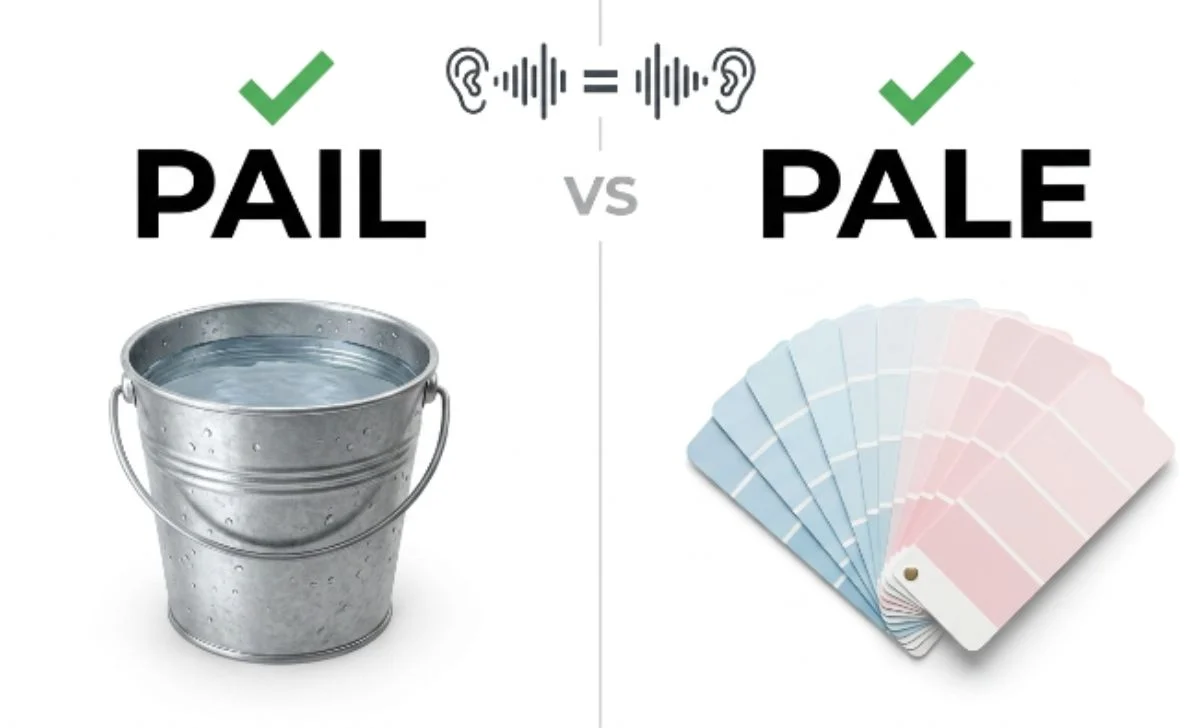
Pail and pale sound different, but they are easy to confuse because their spellings are so similar. Pail is a noun meaning a bucket or container, while pale usually describes something that has a light or weak color.
For example, you can carry water in a pail, but you might describe the water as pale blue. The two words also have different pronunciations, so learning both their meaning and sound makes the distinction easy to remember.
Pail vs Pale: Quick Answer
Pail means a bucket or similar container used for carrying or holding liquids and other materials.
Pale means light in color or lacking strong color. It can also describe someone who looks unusually light because of illness, fear, or shock.
| Word | Meaning | Example |
|---|---|---|
| Pail | A bucket or container | She filled the pail with water. |
| Pale | Light or weak in color | He was wearing a pale blue shirt. |
Quick rule: Pail = bucket. Pale = light color.
What Does Pail Mean?
Pail is a noun for a container, usually with a handle, used for carrying or storing liquids, dirt, sand, paint, and other materials.
It is similar in meaning to bucket, although the exact usage can vary by context.
Common uses of pail
A pail may be used for:
- Carrying water
- Collecting sand
- Holding paint
- Gathering soil or dirt
- Storing cleaning materials
- Carrying food or other materials
Examples
- She carried a pail of water from the well.
- The child filled a pail with sand.
- He left the paint pail outside.
- We used a pail to wash the car.
- The farmer carried a pail into the barn.
What Does Pale Mean?
Pale is most commonly an adjective meaning light in color or less intense than usual.
It can describe colors, skin, faces, objects, and light.
Common meanings of pale
Pale can mean:
- Light in color
- Lacking brightness
- Less intense than another color
- Unusually light in someone’s face
Examples
- She wore a pale pink dress.
- The walls were painted pale yellow.
- His face turned pale with fear.
- The morning sky was pale blue.
- The flowers have pale petals.
Pail vs Pale: Key Differences
The easiest way to distinguish these words is to focus on what they describe.
| Feature | Pail | Pale |
|---|---|---|
| Part of speech | Noun | Usually adjective |
| Meaning | Bucket or container | Light or weak in color |
| Pronunciation | /peɪl/ | /peɪl/ |
| Refers to | An object | Color, appearance, or complexion |
| Example | Fill the pail. | The wall is pale. |
Interestingly, pail and pale are homophones. They are pronounced the same in standard English, even though they have different spellings and meanings.
When to Use Pail
Use pail when you are talking about a bucket or container.
Common phrases
- A pail of water
- A pail of sand
- A paint pail
- A metal pail
- A plastic pail
- A pail with a handle
Real-life examples
- The worker carried a pail of paint upstairs.
- I filled the pail with water.
- The children brought a pail and shovel to the beach.
- She used a small pail to collect the rainwater.
In many everyday situations, bucket is more common than pail, but pail is still a standard English word.
When to Use Pale
Use pale when describing a light color or someone’s unusually light appearance.
Common phrases
- Pale blue
- Pale green
- Pale yellow
- Pale skin
- Pale face
- Pale light
- Pale color
Real-life examples
- The room was decorated in pale blue.
- She has pale skin.
- The sunset faded into a pale orange.
- His face looked pale after the long journey.
- I prefer pale green for the walls.
Pail and Pale Pronunciation
Both words are pronounced the same:
Pail: /peɪl/
Pale: /peɪl/
They rhyme with:
- Male
- Sale
- Tale
- Rail
Because pail and pale sound identical, context tells you which spelling is intended.
For example:
The pale boy carried a pail.
The first word describes the boy’s appearance. The second names the container.
Why Are Pail and Pale Confused?
The main reason is that they are homophones.
Homophones are words that sound the same but have different meanings and spellings.
Other examples include:
- Peace / piece
- Mail / male
- Sale / sail
- Flour / flower
With pail and pale, the pronunciation cannot tell you which word to write. You need to understand the meaning.
If you’re talking about a container, choose pail.
If you’re describing a light color or complexion, choose pale.
Common Mistakes With Pail and Pale
Using pale for a bucket
❌ She filled the pale with water.
✅ She filled the pail with water.
A bucket or container is a pail.
Using pail for a color
❌ The walls are pail blue.
✅ The walls are pale blue.
A light shade of blue is pale blue.
Confusing pale with pale-looking
Pale can describe someone’s face or skin.
For example:
He looked pale after hearing the news.
It does not mean that he became a container. The word describes his appearance.
Pail vs Pale in Everyday Sentences
| Pail | Pale |
|---|---|
| He carried a pail of water. | She wore a pale blue dress. |
| The pail was full of sand. | The walls were pale yellow. |
| I bought a metal pail. | His face looked pale. |
| Put the paint in the pail. | The light was pale and soft. |
| The farmer washed the pail. | The flowers were pale pink. |
FAQs
Is pail and pale the same word?
No. Pail and pale are different words. They have different meanings but are pronounced the same.
What is the difference between pail and pale?
Pail means a bucket or container. Pale means light or weak in color and can also describe an unusually light complexion.
Is a pail the same as a bucket?
Usually, yes. Pail and bucket can refer to similar containers, especially ones with handles.
Is pale a color?
Pale is not usually the name of one specific color. It describes a color that is light or not very intense, such as pale blue or pale pink.
How do you pronounce pail and pale?
Both are pronounced /peɪl/. They sound like “payl.”
Is it a pail of water or a pale of water?
The correct phrase is a pail of water because a pail is a container.
Is it pale blue or pail blue?
The correct phrase is pale blue because pale describes the light shade of blue.
Conclusion
Pail and pale are homophones, so they sound the same but have different meanings and spellings. Use pail when you mean a bucket or container. Use pale when describing a light color, weak shade, or unusually light appearance.
A simple memory trick is: pail = container, pale = color. Once you connect each word with its meaning, choosing the correct spelling becomes straightforward.
Read More:

Hi, I’m Safdar Ali, an English language teacher with 26 years of teaching experience. My expertise is in English linguistics, grammar, and the differences between British and American English.
Through Gramiffy, I share practical, research-based guides to help students, writers, and English learners improve their language skills. My goal is to make English simple, accurate, and easy for everyone to understand.