Every time you save an image, you see two common options: PNG or JPG. Most people click one without thinking, but later they wonder if they made the right choice.
This small decision can affect image quality, file size, website speed, and even SEO performance. That’s why this keyword is searched so often worldwide.
The confusion comes from the fact that both formats are widely used but serve different purposes. One is better for high-quality graphics, while the other is ideal for compressed photos.
In this article, you will clearly understand the difference between PNG and JPG, when to use each one, and how to avoid common mistakes. By the end, you’ll never feel confused again when choosing an image format.
Quick Answer
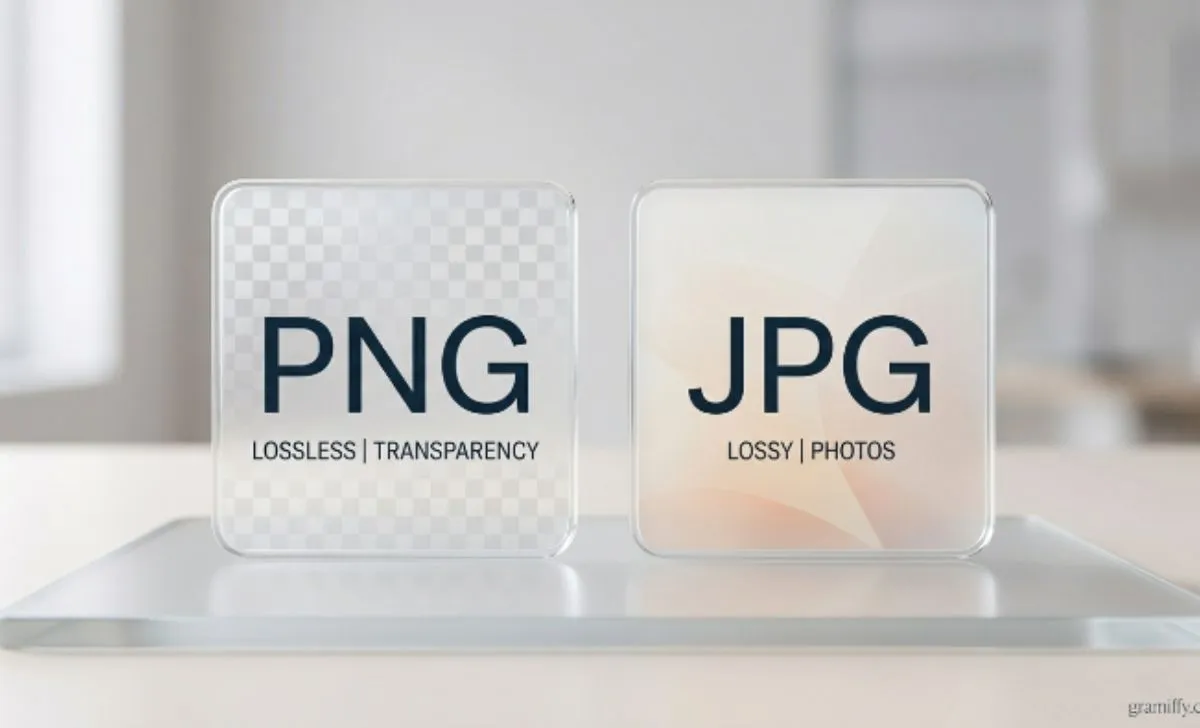
PNG (Portable Network Graphics) and JPG (JPEG) are two different image formats used for different purposes.
- PNG is best for high-quality images, logos, icons, and transparent backgrounds. It uses Lossless Compression.
- JPG is best for photos and web images because it uses Lossy Compression.
Simple Example:
- Logo with transparent background → PNG
- Mobile photo or blog image → JPG
Pronunciation of PNG or JPG
- PNG is pronounced as: “Pee-En-Gee” (each letter separately)
- JPG is pronounced as: “Jay-Peg”
There is no silent letter or alternative pronunciation. Many beginners mistakenly say “Ping” or “J-Page,” but those are incorrect.
Correct pronunciation is important in professional communication, especially in design, development, and digital marketing teams.
Why People Confuse PNG or JPG
People confuse these two formats because:
- Both are used for images on websites
- Both are supported everywhere (phones, apps, browsers)
- File saving options show them side by side
- Their names look technical and similar
Another big reason is that users don’t understand the concept of image compression types like lossless and lossy. So they assume both formats do the same job, which is not true.
Easy Trick to Remember PNG or JPG
Here is a simple memory trick:
- PNG = “Perfect Needs Graphics”
- Perfect quality
- Needs transparency
- Graphics, logos
- JPG = “Just Pretty Good”
- Good enough quality
- Smaller file size
- Photos and web images
If you remember this trick, you will never mix them up again.
The Origin of PNG or JPG
Image File Format formats were developed to solve early internet image problems.
- JPG (JPEG) was created by the Joint Photographic Experts Group in the early 1990s to compress photographs efficiently.
- PNG was developed later in the mid-1990s as a free alternative to GIF, supporting better quality and transparency.
The rise of web usage created demand for smaller and faster-loading images, which made JPG popular. Meanwhile, designers preferred PNG for clean graphics and sharp edges.
British English vs American English Spelling (PNG or JPG Context)
In this case, PNG and JPG are not spelling variations, but file formats. However, naming conventions still show regional usage differences in tech writing.
| Aspect | PNG Usage | JPG Usage |
|---|---|---|
| Global Usage | Universal | Universal |
| Tech Documentation | PNG preferred for graphics | JPG preferred for photos |
| UK/US Difference | No difference | No difference |
| Naming Style | PNG always same | JPG or JPEG used interchangeably |
Unlike words like “color/colour,” these formats do not change by region.
Which Spelling Should You Use?
You should always use the standard names:
- Use PNG when referring to transparent or high-quality images
- Use JPG/JPEG when referring to compressed photographs
For global content (blogs, SEO, YouTube descriptions), both are accepted, but consistency is important.
If you are writing for technical audiences, prefer:
- PNG (Portable Network Graphics)
- JPEG (Joint Photographic Experts Group)
Common Mistakes with PNG or JPG
Here are frequent mistakes users make:
- Saving logos as JPG (causes blurry edges)
- Using PNG for large photos (increases file size)
- Confusing PNG transparency support
- Thinking JPG always has low quality
- Using wrong format for website speed optimization
These mistakes can affect website performance and visual quality.
PNG or JPG in Everyday Examples
Websites:
- Blog images → JPG (faster loading)
- Icons and logos → PNG (sharp edges)
Social Media:
- Instagram photos → JPG
- Profile logos → PNG
Emails:
- Product banners → JPG
- Brand logos → PNG
Professional Design:
- UI design → PNG
- Photography portfolio → JPG
Google Trends & Usage Data
Globally, both formats are highly searched, but usage depends on industry:
- JPG is more popular in photography and blogging
- PNG is more popular in design, UI/UX, and branding
Search trends show that queries like:
- “PNG vs JPG which is better”
- “PNG or JPG for website”
are consistently rising due to SEO awareness and content creation growth.
This shows users are not just searching for definitions, but practical decisions.
Comparison Table
| Feature | PNG | JPG |
|---|---|---|
| Compression | Lossless | Lossy |
| File Size | Larger | Smaller |
| Quality | High | Medium-High |
| Transparency | Yes | No |
| Best For | Logos, icons | Photos, web images |
| Website Speed | Slower | Faster |
FAQs
1. Which is better PNG or JPG?
It depends. PNG is better for quality and transparency, JPG is better for small file size.
2. Does PNG have better quality than JPG?
Yes, PNG keeps full quality using lossless compression.
3. Is JPG good for websites?
Yes, JPG is widely used because it loads faster.
4. Can PNG be used for photos?
Yes, but it increases file size significantly.
5. Why is JPG smaller than PNG?
Because JPG uses lossy compression that removes some image data.
6. What format is best for logos?
PNG is best due to transparency support.
7. Can I convert PNG to JPG?
Yes, but transparency will be lost.
Conclusion
Choosing between PNG or JPG is not about which one is better overall, but about which one fits your purpose.
PNG is ideal when you need high-quality graphics, sharp edges, and transparency, while JPG is perfect for photographs and faster web performance due to smaller file size.
Understanding the difference helps improve website speed, SEO, and visual quality. Many beginners make mistakes by using the wrong format, but now you know exactly when to use each one.
If you follow these simple rules, your images will always look professional and load efficiently across all platforms. This knowledge is especially useful for bloggers, designers, and website owners who want better results online.
Read More Blogs :

I am Constance Hale, an, editor, and writing expert dedicated to helping people write with clarity and confidence. Through my articles on Gramiffy.com, I simplify grammar, spelling, and language usage for readers of all levels. My goal is to make English writing more engaging, accurate, and enjoyable.