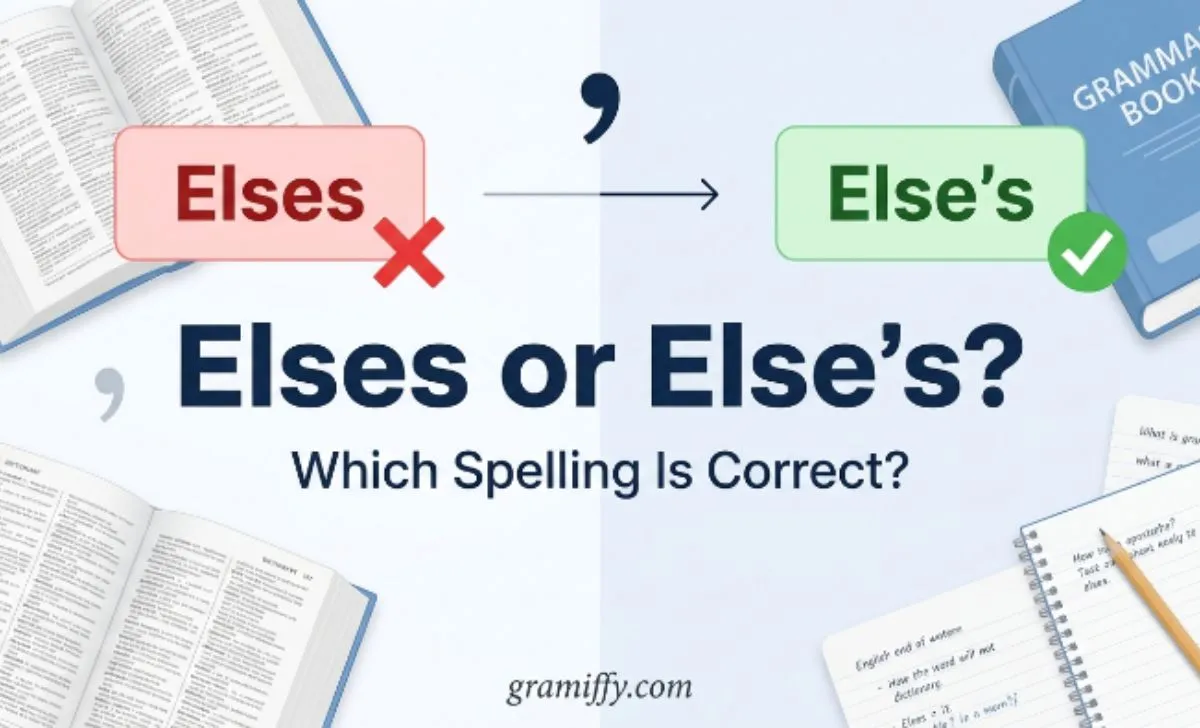
Have you ever stopped while writing elses or else’s and wondered which spelling is actually correct? You’re not alone.
Thousands of students, writers, professionals, and English learners search this grammar question every month because a single apostrophe can completely change whether a sentence is grammatically correct.
The good news is that the rule is straightforward once you understand it. In standard English, else’s is the correct possessive form used to show ownership, while elses is generally considered incorrect.
This complete guide explains the difference using simple grammar rules, real life examples, comparison tables, word origins, common mistakes, and expert writing tips.
By the end, you’ll know exactly when to use else’s, why elses is usually wrong, and how to avoid this common punctuation error in every type of writing.
Quick Answer
If you’re deciding between elses and else’s, the correct choice is else’s. It is the standard possessive form of else and is used to show that something belongs to another person or thing. The spelling elses is generally incorrect in modern English and should not be used in formal or everyday writing. For example, “That’s someone else’s laptop.” is correct, while “That’s someone elses laptop.” is not. A simple rule to remember is: if you’re showing ownership, always use else’s with an apostrophe.
At a Glance: Elses vs Else’s
| Feature | Else’s | Elses |
|---|---|---|
| Standard English spelling | ✅ Correct | ❌ Incorrect |
| Shows possession | ✅ Yes | ❌ No |
| Accepted in academic writing | ✅ Yes | ❌ No |
| Used in business writing | ✅ Yes | ❌ No |
| Found in modern dictionaries | ✅ Yes | ❌ No (as the standard possessive) |
| Recommended by grammar experts | ✅ Yes | ❌ No |
| Appropriate for exams | ✅ Yes | ❌ No |
| Used by native English speakers | ✅ Yes | Rarely and usually as an error |
Table of Contents
- What Is the Difference Between Elses and Else’s?
- Word Origin and Etymology
- What Does Else Mean?
- Why Is Else’s Correct?
- Why Is Elses Incorrect?
- American English vs British English
- Dictionary Definitions
- Grammar Rule Explained
- Parts of Speech
- Pronunciation
- How to Use Else’s
- Common Expressions
- Examples in Everyday English
- Formal vs Informal Usage
- Academic Writing
- Business Writing
- Common Mistakes
- Grammar Tips
- Practice Quiz
- FAQs
- Final Verdict
- Conclusion
Word Origin and Etymology
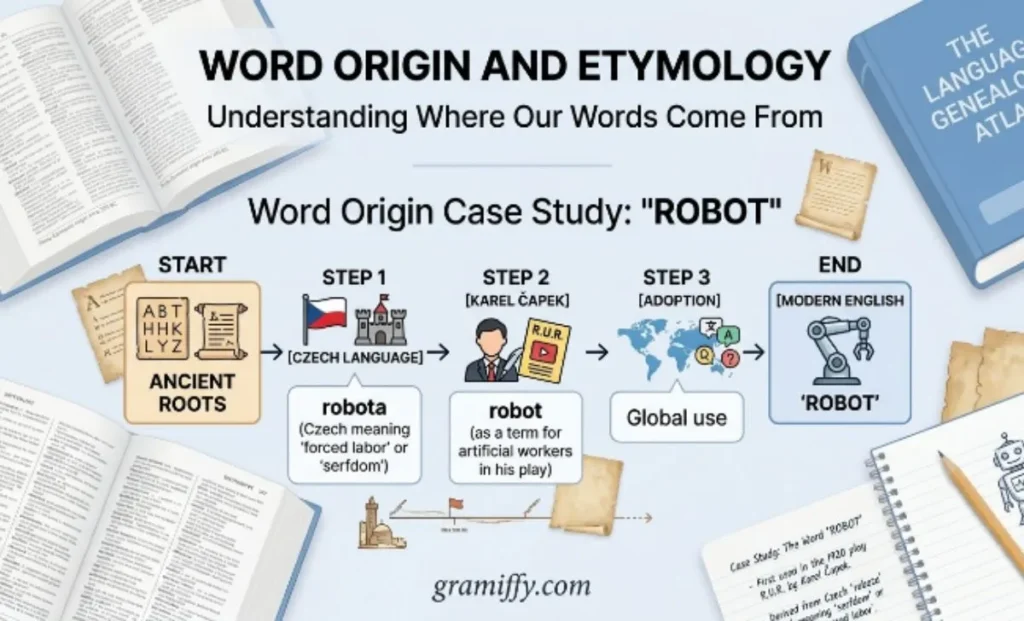
Understanding where a word comes from often makes its grammar easier to remember.
The word else has a long history that dates back more than a thousand years. It originated from the Old English word elles, which meant “otherwise,” “in another way,” or “different.” Over time, the meaning expanded to refer to another person, another thing, or something different from what has already been mentioned.
The word also shares roots with several Germanic languages, showing how deeply it is embedded in the history of English.
| Period | Form | Meaning |
|---|---|---|
| Old English | elles | Otherwise, differently |
| Middle English | elles / else | Another, other |
| Modern English | else | Another person or thing |
| Modern Possessive | else’s | Belonging to another person or thing |
An interesting point is that although the historical form elles existed centuries ago, modern English does not use “elses” as the possessive spelling. Instead, English follows its regular possessive rule by adding an apostrophe and s, creating else’s.
This historical background explains why many people mistakenly assume elses is correct. They see the extra s and think it forms a possessive, but modern English grammar requires else’s.
What Is the Difference Between Elses and Else’s?
Although these two spellings look almost identical, only one follows standard English grammar.
The difference comes down to a single punctuation mark—the apostrophe.
| Word | Correct? | Meaning | Example |
|---|---|---|---|
| Else’s | ✅ Yes | Indicates possession | That’s someone else’s phone. |
| Elses | ❌ No | Not the standard possessive form | That’s someone elses phone. ❌ |
The apostrophe shows that something belongs to someone else, anyone else, everybody else, or another person.
Compare these examples:
| Incorrect | Correct |
|---|---|
| Someone elses backpack | Someone else’s backpack |
| Anybody elses opinion | Anybody else’s opinion |
| Nobody elses fault | Nobody else’s fault |
| Everyone elses homework | Everyone else’s homework |
| Someone elses responsibility | Someone else’s responsibility |
Whenever you express ownership, else’s is the form you should use.
What Does Else Mean?
Before learning else’s, it’s important to understand the base word else.
Else is a common English word used to refer to another person, another thing, an additional option, or something different from what has already been mentioned.
It often appears after indefinite pronouns and question words.
Examples include:
- Who else is coming?
- What else do you need?
- Where else can we park?
- Is anyone else joining us?
- Somebody else already answered the question.
- Nothing else matters right now.
- Would you like anything else?
- Everyone else has already left.
Notice that else by itself does not show ownership. It simply refers to another person or thing.
Ownership is only expressed when the possessive ending is added:
- someone else’s idea
- anybody else’s bag
- everyone else’s results
- nobody else’s responsibility
This distinction is the foundation for understanding why else’s is correct and elses is not.
Why Is Else’s Correct?
The reason is simple: English possessive grammar.
When a singular noun or pronoun owns something, English usually forms the possessive by adding ‘s.
| Base Word | Possessive Form |
|---|---|
| John | John’s |
| Teacher | Teacher’s |
| Manager | Manager’s |
| Child | Child’s |
| Else | Else’s |
Because else follows this same grammatical pattern, the correct possessive form is else’s.
Examples:
- That’s someone else’s notebook.
- I accidentally opened somebody else’s email.
- Please don’t use anyone else’s password.
- We parked in somebody else’s driveway.
- This isn’t everyone else’s problem.
The apostrophe isn’t optional it performs an important grammatical function by indicating ownership.
Without it, the sentence no longer follows standard English conventions.
Why Is Elses Incorrect?
One of the biggest reasons people search “elses or else’s” is because both spellings seem logical at first glance. However, standard English grammar accepts only one of them.
The spelling elses is generally considered incorrect when you want to show possession.
Why?
Because English forms the possessive of else by adding ‘s, not simply s.
Compare the Difference
| Incorrect | Correct |
|---|---|
| someone elses car | someone else’s car |
| anybody elses opinion | anybody else’s opinion |
| nobody elses responsibility | nobody else’s responsibility |
| everyone elses homework | everyone else’s homework |
| somebody elses mistake | somebody else’s mistake |
| someone elses phone | someone else’s phone |
Although elses looks similar to many English plural forms, it is not the standard possessive spelling.
A good rule to remember is:
If something belongs to another person, always write else’s, never elses.
American English vs British English
One of the most common questions is whether American and British English use different spellings.
The answer is no.
Unlike words such as color/colour, center/centre, or honor/honour, there is no spelling difference between American English and British English for else’s.
Comparison Table
| Feature | American English | British English |
|---|---|---|
| Correct spelling | Else’s | Else’s |
| Uses apostrophe | ✅ Yes | ✅ Yes |
| Meaning | Same | Same |
| Grammar rule | Same | Same |
| Formal writing | ✅ Yes | ✅ Yes |
| Academic writing | ✅ Yes | ✅ Yes |
| Business writing | ✅ Yes | ✅ Yes |
| Pronunciation | Nearly identical | Nearly identical |
Whether you’re writing in the United States, the United Kingdom, Canada, Australia, New Zealand, or any other English-speaking country, else’s is the correct form.
Dictionary Definitions
Leading English dictionaries agree that else’s is the standard possessive form.
Dictionary Comparison
| Dictionary | Definition Summary |
|---|---|
| Oxford | Possessive form of else, meaning belonging to another person or thing. |
| Cambridge | Used after words like someone, anyone, and everyone to indicate possession. |
| Merriam-Webster | Standard possessive form of else used to show ownership. |
| Collins | Indicates something belongs to another person or thing. |
All major dictionaries support the same grammar rule.
None recommend replacing else’s with elses in standard writing.
Pronunciation
Although the apostrophe changes the grammar, it does not significantly change the pronunciation.
| Word | IPA | Pronunciation |
|---|---|---|
| else | /els/ | els |
| else’s | /ˈelsɪz/ | EL-siz |
Because the pronunciation naturally ends with an “iz” sound, many learners mistakenly assume the spelling should simply be elses.
However, English spelling follows grammar, not pronunciation.
The apostrophe must remain.
Parts of Speech
Understanding the grammatical role of else makes the possessive form easier to remember.
| Word | Part of Speech | Example |
|---|---|---|
| else | Adverb | What else do you need? |
| else | Adjective (in certain constructions) | Someone else will help. |
| else’s | Possessive form | Someone else’s bag is here. |
Notice that else’s functions as a possessive modifier describing the noun that follows.
Example:
- someone else’s phone
- anyone else’s decision
- nobody else’s responsibility
Grammar Rule Explained
The grammar behind else’s follows one of the most basic rules in English.
Rule
When a singular word owns something:
Word + ‘s
Examples:
| Base Word | Possessive |
|---|---|
| student | student’s |
| teacher | teacher’s |
| doctor | doctor’s |
| manager | manager’s |
| child | child’s |
| else | else’s |
The rule doesn’t change simply because else often appears after another word.
For example:
- someone else’s car
- anybody else’s opinion
- everyone else’s homework
The possessive ending always comes after “else”, not after the pronoun.
Why the Apostrophe Comes After Else
Many learners ask:
Why isn’t it someone’s else?
Because someone else functions together as a single expression.
The word else modifies the pronoun, and the possessive ending is added to the complete expression.
Compare:
| Expression | Correct Possessive |
|---|---|
| someone else | someone else’s |
| anyone else | anyone else’s |
| everyone else | everyone else’s |
| nobody else | nobody else’s |
| somebody else | somebody else’s |
Writing someone’s else is incorrect because the ownership belongs to the entire phrase someone else, not just someone.
How to Use Else’s Correctly
The easiest way to master this grammar point is to see it in real sentences.
Everyday Examples
- That’s someone else’s jacket.
- I accidentally opened somebody else’s email.
- This isn’t anyone else’s problem.
- Don’t use somebody else’s charger.
- We found someone else’s wallet.
- I parked in somebody else’s space.
- Nobody else’s answer was correct.
- Everyone else’s luggage has arrived.
- Is this anyone else’s umbrella?
- Please respect somebody else’s privacy.
Each sentence clearly shows ownership.
If the apostrophe were removed, every sentence would become grammatically incorrect.
Common Expressions with Else’s
Native English speakers use these phrases every day.
| Expression | Example Sentence |
|---|---|
| someone else’s | That’s someone else’s backpack. |
| somebody else’s | Somebody else’s phone is ringing. |
| anyone else’s | Is this anyone else’s laptop? |
| anybody else’s | I don’t need anybody else’s approval. |
| everyone else’s | Everyone else’s projects are finished. |
| everybody else’s | Everybody else’s names are listed. |
| nobody else’s | It’s nobody else’s responsibility. |
| no one else’s | The victory belongs to no one else’s team. |
Learning these expressions will make your English sound natural and grammatically accurate.
Else’s in Everyday English
The possessive form else’s appears in conversations more often than many people realize. Native English speakers use it naturally when referring to something that belongs to another person or another group.
| Sentence | Correct? |
|---|---|
| That’s someone else’s notebook. | ✅ |
| I accidentally took somebody else’s calculator. | ✅ |
| Never copy anyone else’s homework. | ✅ |
| Everyone else’s projects look amazing. | ✅ |
| Is this anybody else’s pencil? | ✅ |
| Sentence | Correct? |
|---|---|
| Please don’t access someone else’s files. | ✅ |
| That’s somebody else’s office. | ✅ |
| Don’t send emails from anyone else’s account. | ✅ |
| Everyone else’s reports have been submitted. | ✅ |
| This isn’t anybody else’s responsibility. | ✅ |
| Sentence | Correct? |
|---|---|
| Someone else’s package arrived today. | ✅ |
| That’s somebody else’s toothbrush. | ✅ |
| Don’t wear anyone else’s shoes. | ✅ |
| Is this everybody else’s luggage? | ✅ |
| Nobody else’s room is this messy. | ✅ |
Using these expressions correctly helps your writing and speech sound natural, professional, and grammatically accurate.
Formal vs Informal Usage
Another common question is whether else’s is appropriate only in casual conversations.
The answer is no. It is correct in both formal and informal English.
| Writing Style | Can You Use Else’s? | Example |
|---|---|---|
| Academic Writing | ✅ Yes | Students should not copy someone else’s work. |
| Business Writing | ✅ Yes | Do not access anyone else’s account. |
| Legal Documents | ✅ Yes | No one may use somebody else’s property without permission. |
| News Articles | ✅ Yes | Authorities recovered someone else’s belongings. |
| Everyday Conversation | ✅ Yes | That’s someone else’s coffee. |
| Social Media | ✅ Yes | I accidentally grabbed somebody else’s bag! |
Unlike slang or informal expressions, else’s is accepted in every variety of standard English.
Academic Writing Examples
Students frequently encounter this grammar rule in essays, assignments, and examinations.
Here are examples suitable for academic writing:
- Students should never submit someone else’s research as their own.
- Every citation must acknowledge someone else’s ideas.
- Using anyone else’s work without proper credit is plagiarism.
- Researchers should respect everybody else’s intellectual property.
- The experiment should not rely on anyone else’s unpublished data.
Academic Writing Checklist
| Rule | Status |
|---|---|
| Use else’s to show possession | ✅ |
| Avoid elses | ✅ |
| Keep the apostrophe | ✅ |
| Proofread before submitting | ✅ |
Correct punctuation is especially important in academic settings because it reflects attention to detail and language accuracy.
Business Writing Examples
Professional communication also requires the correct possessive form.
Examples include:
- Never share someone else’s password.
- Employees should not access anybody else’s files.
- Please return someone else’s equipment immediately.
- This document contains someone else’s confidential information.
- Don’t sign somebody else’s name without authorization.
Business Examples Table
| Incorrect | Correct |
|---|---|
| someone elses account | someone else’s account |
| anybody elses password | anybody else’s password |
| everyone elses documents | everyone else’s documents |
| somebody elses laptop | somebody else’s laptop |
| nobody elses responsibility | nobody else’s responsibility |
Using proper grammar in emails, reports, and presentations enhances professionalism and reduces misunderstandings.
Common Grammar Mistakes
Even experienced writers occasionally make mistakes with else’s.
Here are the most common ones.
Mistake 1: Omitting the Apostrophe
❌ Someone elses wallet
✅ Someone else’s wallet
Mistake 2: Adding the Apostrophe in the Wrong Place
❌ Someone’ elses phone
✅ Someone else’s phone
Mistake 3: Using Elses as a Standalone Word
❌ Elses is the correct spelling.
✅ Else’s is the correct possessive spelling.
Mistake 4: Copying Incorrect Online Usage
Many social media posts ignore punctuation.
Examples:
- someone elses
- anybody elses
- everybody elses
- no one elses
These spellings may be common online, but they are not correct in standard English.
Why Do People Write Elses?
If else’s is so straightforward, why do so many people write elses?
Several factors contribute to this common error.
| Reason | Explanation |
|---|---|
| Fast typing | Writers often forget apostrophes while typing quickly. |
| Autocorrect issues | Some devices fail to correct missing punctuation. |
| Pronunciation | Else’s sounds like “elses,” causing spelling confusion. |
| Lack of grammar knowledge | Many learners don’t realize the apostrophe indicates possession. |
| Informal writing habits | Social media often ignores punctuation rules. |
Understanding these causes makes the mistake much easier to avoid.
Memory Trick to Remember Else’s
Need an easy way to remember the correct spelling?
Use this simple question:
Does something belong to another person?
If the answer is yes, use else’s.
Examples
| Question | Correct Answer |
|---|---|
| Does the phone belong to another person? | Someone else’s phone |
| Does the backpack belong to another student? | Someone else’s backpack |
| Does the opinion belong to another employee? | Somebody else’s opinion |
| Does the idea belong to another writer? | Someone else’s idea |
Quick Formula
Ownership = Else + ‘s = Else’s
Remembering this one formula will help you avoid nearly every mistake involving this word.
Similar Grammar Rules
Learning else’s becomes even easier when you compare it with other possessive forms.
| Base Word | Possessive Form | Example |
|---|---|---|
| someone | someone’s | Someone’s phone is ringing. |
| anyone | anyone’s | Anyone’s guess is acceptable. |
| everybody | everybody’s | Everybody’s opinion matters. |
| nobody | nobody’s | Nobody’s fault was found. |
| teacher | teacher’s | The teacher’s lesson was engaging. |
| manager | manager’s | The manager’s office is upstairs. |
| else | else’s | That’s someone else’s jacket. |
Notice that else’s follows the same possessive rule as every other singular noun or pronoun in English, making it consistent with the language’s broader grammar system.
Practice Quiz
Test your understanding of elses vs else’s with these quick questions.
Question 1
Which sentence is correct?
A. Someone elses wallet is on the desk.
B. Someone else’s wallet is on the desk.
✅ Answer: B
Question 2
Choose the correct phrase.
A. Anybody elses opinion
B. Anybody else’s opinion
✅ Answer: B
Question 3
Complete the sentence:
“This laptop belongs to ______.”
A. someone elses
B. someone else’s
✅ Answer: B
Question 4
Which sentence follows standard English grammar?
A. Everyone elses assignments were submitted.
B. Everyone else’s assignments were submitted.
✅ Answer: B
Question 5
Which spelling is accepted in modern English?
A. else’s
B. elses
✅ Answer: A
Practice Exercise
Rewrite each incorrect sentence correctly.
| Incorrect Sentence | Correct Sentence |
|---|---|
| That’s someone elses bike. | That’s someone else’s bike. |
| I borrowed anybody elses charger. | I borrowed anybody else’s charger. |
| Everyone elses homework was excellent. | Everyone else’s homework was excellent. |
| This is nobody elses responsibility. | This is nobody else’s responsibility. |
| Somebody elses phone is ringing. | Somebody else’s phone is ringing. |
If you can correct all five without hesitation, you’ve mastered the grammar rule.
Quick Grammar Cheat Sheet
Save this table as a quick reference whenever you’re unsure.
| Situation | Correct Form |
|---|---|
| Showing possession | Else’s |
| Standard English | Else’s |
| Academic writing | Else’s |
| Business writing | Else’s |
| Formal emails | Else’s |
| Essays | Else’s |
| Exams | Else’s |
| Social media | Else’s (even if many people omit the apostrophe) |
Formula to Remember
Possession = Else + ‘s = Else’s
Never write elses when expressing ownership.
Frequently Asked Questions (FAQs)
Is elses a real word?
In modern standard English, elses is generally not accepted as the correct possessive form. If you want to show ownership, use else’s.
Is else’s grammatically correct?
Yes. Else’s is the standard possessive form of else and is correct in formal, academic, business, and everyday English.
Why does else’s have an apostrophe?
The apostrophe shows possession. Just as John’s car means the car belongs to John, someone else’s phone means the phone belongs to another person.
Can I write someone elses?
No.
The correct form is:
✅ someone else’s
The version without the apostrophe is a grammatical error.
Is anyone else’s correct?
Yes.
Examples:
- Is this anyone else’s notebook?
- Has anyone else’s order arrived?
- Don’t use anyone else’s password.
Is everyone else’s correct?
Yes.
Examples:
- Everyone else’s seats were reserved.
- Everyone else’s projects were completed.
- Everyone else’s applications were approved.
Is nobody else’s correct?
Yes.
Example:
It was nobody else’s fault.
Is there a difference between American and British English?
No.
Both American English and British English use else’s. There is no spelling difference for this word.
Can else’s be used in formal writing?
Absolutely.
It is appropriate in:
- Academic essays
- Research papers
- Business reports
- Legal documents
- Professional emails
- Newspapers
- Books
- Technical documentation
Why do people often write elses?
The mistake usually happens because:
- Writers forget the apostrophe.
- They spell the word based on its pronunciation.
- They type too quickly.
- Informal online writing often ignores punctuation.
How can I remember the correct spelling?
Ask yourself one question:
Does something belong to another person?
If the answer is yes, write else’s.
Key Takeaways
Before you leave, remember these essential points.
| Rule | Remember |
|---|---|
| Correct spelling | Else’s ✅ |
| Incorrect spelling | Elses ❌ |
| Shows possession | Yes |
| Uses an apostrophe | Always |
| Accepted in formal English | Yes |
| Accepted in American English | Yes |
| Accepted in British English | Yes |
| Recommended by grammar experts | Yes |
Final Verdict: Elses or Else’s?
If you’re choosing between elses and else’s, the answer is clear.
✅ Else’s is the correct spelling in standard English because it follows the regular rule for forming singular possessives.
❌ Elses is not the accepted possessive form and should be avoided in academic writing, professional communication, business documents, and everyday English.
Whenever you’re expressing ownership, always write:
- someone else’s idea
- anybody else’s opinion
- everyone else’s homework
- nobody else’s responsibility
- somebody else’s phone
Adding the apostrophe may seem like a small detail, but it ensures your writing is grammatically correct, polished, and professional.
Conclusion
The confusion between elses and else’s usually comes down to one tiny punctuation mark—the apostrophe.
While both spellings may look plausible, only else’s follows the rules of modern English grammar.
It is the correct possessive form used to show that something belongs to another person or thing, whereas elses is generally considered incorrect in standard usage.
Whether you’re writing an essay, sending a professional email, publishing a blog post, or simply improving your English skills, choosing else’s demonstrates strong grammar and attention to detail.
By remembering the simple rule ownership requires an apostrophe
you can confidently avoid this common mistake every time.
With its clear grammar explanation, historical background, comparison tables, practical examples, quizzes, and FAQs, this guide gives you everything you need to understand elses vs else’s and use the correct form with confidence.
Read More :

I am Constance Hale, an, editor, and writing expert dedicated to helping people write with clarity and confidence. Through my articles on Gramiffy.com, I simplify grammar, spelling, and language usage for readers of all levels. My goal is to make English writing more engaging, accurate, and enjoyable.