Many English learners and native speakers alike pause when they encounter the words himself and hisself.
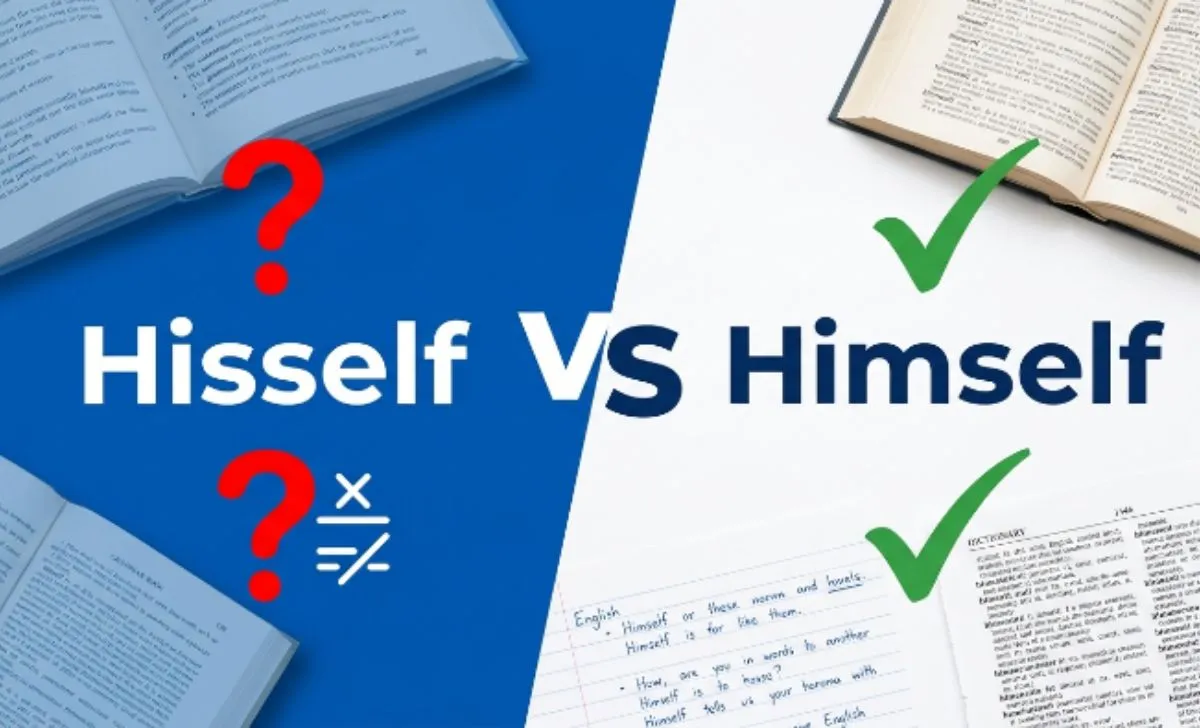
At first glance, both seem to follow the same pattern as reflexive pronouns like myself, yourself, and herself. This often leads people to wonder: Is it himself or hisself?
The confusion usually comes from hearing hisself in conversations, movies, regional dialects, or social media posts.
Because the word appears in spoken English, many people assume it is a correct alternative spelling. Others search online because they want to avoid grammar mistakes in emails, reports, essays, or professional writing.
If you have ever asked, “Which is correct: himself or hisself?” this guide will give you a clear answer.
You will learn the difference between the two forms, their origins, how they are used in British and American English, and which spelling you should choose in different situations.
By the end, you will know exactly when to use himself and why hisself is generally avoided in standard English.
Quick Answer
Himself is the correct and standard reflexive pronoun in English.
Hisself exists in some regional dialects and informal speech, but it is considered nonstandard English and should not be used in formal writing.
Correct Examples
✅ The manager introduced himself to the new employees.
✅ John completed the project by himself.
Nonstandard Example
❌ He taught hisself how to play the guitar.
While some speakers may use hisself in everyday conversation, grammar guides and style manuals recommend using himself in all standard writing.
The Origin of Himself or Hisself
The word himself has been part of the English language for centuries. It developed from the combination of the object pronoun him and the intensifier self.
Over time, English created a set of reflexive pronouns:
- Myself
- Yourself
- Himself
- Herself
- Itself
- Ourselves
- Yourselves
- Themselves
The form hisself appeared later in certain regional dialects. Linguists believe speakers created it by following the pattern of words like myself and herself. Because his is a possessive form, some people naturally formed hisself instead of himself.
Although the word has historical use in dialect speech, it never became part of standard English grammar.
As a result, modern dictionaries label hisself as nonstandard, dialectal, or informal.
British English vs American English Spelling
Unlike some spelling differences such as colour vs color or analysing vs analyzing, there is no major British English vs American English difference for this word.
Both British and American English use himself as the standard form.
Comparison Table
| Feature | Himself | Hisself |
|---|---|---|
| Standard English | Yes | No |
| British English | Accepted | Nonstandard |
| American English | Accepted | Nonstandard |
| Formal Writing | Recommended | Not Recommended |
| Academic Writing | Correct | Incorrect |
| Business Communication | Correct | Incorrect |
| Regional Dialects | Rare | Sometimes Used |
Examples
| British English | American English |
|---|---|
| He prepared himself for the interview. | He prepared himself for the interview. |
| The athlete challenged himself. | The athlete challenged himself. |
As you can see, both varieties of English use the same standard spelling: himself.
Which Spelling Should You Use?
The answer is simple.
If You Write for an American Audience
Use himself.
If You Write for a British Audience
Use himself.
If You Write for a Global Audience
Use himself.
If You Are Writing Professionally
Use himself.
If You Are Writing Academically
Use himself.
The only time you may encounter hisself is in:
- Regional dialects
- Fictional dialogue
- Informal speech
- Historical language examples
For nearly every modern writing situation, himself is the correct choice.
Common Mistakes with Himself or Hisself
Many writers make mistakes because they hear hisself in spoken language.
Mistake 1: Using Hisself in Formal Writing
❌ The CEO introduced hisself to the audience.
✅ The CEO introduced himself to the audience.
Mistake 2: Assuming Hisself Is an Alternative Spelling
❌ Both spellings are equally correct.
✅ Only himself is standard English.
Mistake 3: Copying Dialect Speech into Professional Content
❌ The employee completed the task hisself.
✅ The employee completed the task himself.
Mistake 4: Confusing Spoken and Written English
Some regional speakers may say hisself, but standard written English still requires himself.
Himself or Hisself in Everyday Examples
Understanding real-world usage makes the difference easier to remember.
Email Example
✅ David completed the report himself.
News Example
✅ The politician defended himself during the interview.
Social Media Example
✅ He taught himself graphic design using online videos.
Formal Writing Example
✅ The researcher himself reviewed the final results.
Informal Dialect Example
❌ He fixed the car hisself.
While the last example may appear in speech or storytelling, it should generally not appear in professional writing.
Google Trends & Usage Data
Search interest for himself or hisself often comes from:
- English learners
- Students
- Teachers
- Writers
- Editors
- Content creators
People commonly search:
- Is hisself a word?
- Himself vs hisself
- Which is correct himself or hisself?
- Why do people say hisself?
- Is hisself grammatically correct?
Usage patterns show that himself dominates formal writing worldwide.
Countries with strong interest in English grammar topics include:
- United States
- United Kingdom
- Canada
- Australia
- India
Meanwhile, hisself appears mainly in regional speech patterns, dialect studies, and discussions about language variation.
Himself vs Hisself Comparison Table
| Aspect | Himself | Hisself |
|---|---|---|
| Meaning | Reflexive pronoun | Same intended meaning |
| Grammar Status | Standard | Nonstandard |
| Dictionary Acceptance | Yes | Limited |
| Formal Use | Yes | No |
| Academic Use | Yes | No |
| Business Use | Yes | No |
| Common in Dialects | Rare | More Common |
| Recommended Choice | Yes | No |
FAQs
Is it himself or hisself?
Himself is the correct and standard form.
Is hisself a real word?
Yes, but it is considered nonstandard and mainly appears in regional dialects.
Why do some people say hisself?
People often use it because of local speech patterns and dialect traditions.
Is hisself grammatically correct?
No. Standard English grammar recommends using himself.
Can I use hisself in an essay?
No. Academic and professional writing should use himself.
Do Americans use hisself?
Some regional American dialects use it in speech, but standard American English uses himself.
Do British people use hisself?
It may appear in certain dialects, but standard British English uses himself.
Conclusion
The debate between himself or hisself has a simple answer: himself is the correct and standard English form.
Whether you are writing an email, academic paper, business report, social media post, or news article, himself is the spelling you should choose.
The word hisself does exist, but it belongs primarily to regional dialects and informal speech. While linguists recognize it as part of language variation, it is not accepted as standard English.
That means it should generally be avoided in professional, academic, and formal communication.
A useful way to remember the rule is to think about the established set of reflexive pronouns in English. The standard pattern includes myself, yourself, himself, herself, itself, and themselves. Among these forms, himself is the only accepted reflexive pronoun for he.
If your goal is clear, professional, and grammatically correct writing, the safest choice is always himself. Using the standard form will help you communicate effectively and avoid unnecessary grammar mistakes.
Read More Blogs :

I am Bryan A. Garner a lexicographer, and language expert passionate about clear and effective writing.
I contribute grammar, spelling, and usage guides on Gramiffy.com to help readers improve their English skills. Through my work, I aim to make language rules simple, practical, and easy to understand.