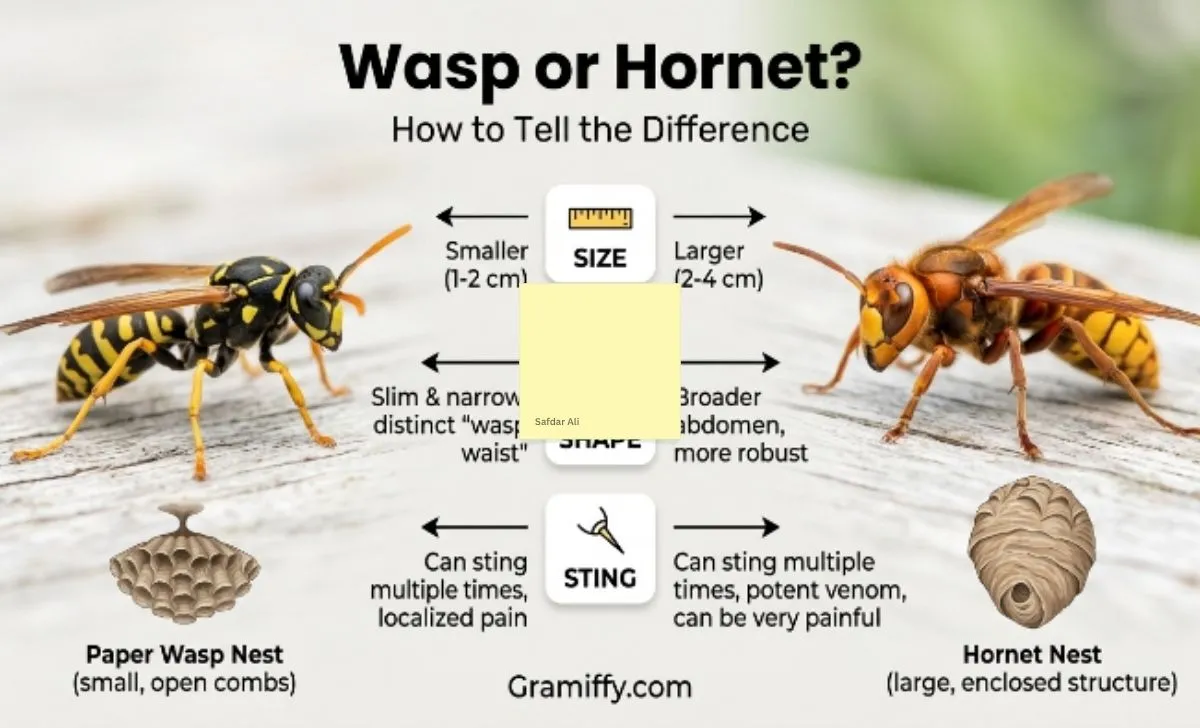
Have you seen a large stinging insect flying around your garden, roof, or backyard and wondered whether it was a wasp or a hornet?
You are not alone. Every year, thousands of homeowners, gardeners, and outdoor enthusiasts search for the difference between these insects.
Many people are unsure whether hornets and wasps are the same thing, which one is more dangerous, or how to identify their nests.
The confusion is understandable because hornets and wasps belong to the same insect family, known as Vespidae, and share many characteristics.
Both can sting multiple times, build paper-like nests, and become defensive when their colony is threatened. However, they differ in size, appearance, behavior, nesting habits, and how they interact with humans.
If you have ever searched for questions such as “Are hornets wasps?”, “Which sting hurts more?”, “How do I identify a hornet nest?”, or “Which insect is more aggressive?”, this guide will give you clear answers.
By the end, you will know how to identify a wasp or hornet, understand their risks, and learn when professional pest control may be necessary.
Quick Answer
A hornet is a type of wasp.
However, hornets are usually larger, heavier-bodied, and more defensive around their nests than most common wasps.
Quick Comparison
| Feature | Wasp | Hornet |
|---|---|---|
| Size | Smaller | Larger |
| Body Shape | Slim | Thick |
| Nest Size | Small to Medium | Large |
| Sting | Painful | Often More Painful |
| Aggression | Moderate | Highly Defensive Near Nest |
A hornet is a type of wasp. Hornets are generally larger than common wasps, build larger nests, and may deliver more painful stings. Most wasps are smaller and include species such as paper wasps and yellowjackets. Both insects can sting multiple times and become aggressive when protecting their colonies.
What Is a Wasp?
Wasps are stinging insects belonging to the order Hymenoptera and the family Vespidae.
Common examples include:
- Paper Wasps
- Yellowjackets
- Mud Daubers
- Potter Wasps
Most wasps are predators that help control garden pests such as caterpillars and flies.
What Is a Hornet?
Hornets are a subgroup of social wasps.
Common hornet species include:
- European Hornet
- Bald-Faced Hornet
- Asian Giant Hornet
Hornets are typically larger than other wasps and live in large colonies led by a queen.
How to Identify a Wasp or Hornet
One of the biggest reasons people search “wasp or hornet” is insect identification.
Visual Identification Table
| Feature | Wasp | Hornet |
|---|---|---|
| Length | Usually 1–2 cm | Often 2–5 cm |
| Body | Slim Waist | Thick Waist |
| Head | Smaller | Larger |
| Color | Bright Yellow & Black | Brown, Red, Yellow |
| Flight | Fast and Agile | Slower but Powerful |
Quick Identification Rule
If the insect appears unusually large and thick-bodied, it is more likely a hornet.
If it is smaller and slender, it is probably a wasp.
Are Hornets Wasps?
Yes.
This is one of the most searched questions online.
All hornets are wasps because they belong to the same family, Vespidae.
However, not all wasps are hornets.
Think of it this way:
- Hornet = Specific Type of Wasp
- Wasp = Larger Group of Insects
Which Is More Dangerous: Wasp or Hornet?
For most people, neither insect is dangerous unless disturbed.
However, hornets are generally considered more intimidating because they are larger and can inject more venom per sting.
Danger Comparison
| Factor | Wasp | Hornet |
|---|---|---|
| Sting Pain | High | Very High |
| Venom Amount | Moderate | Higher |
| Nest Defense | Moderate | Strong |
| Threat to Humans | Low | Low to Moderate |
The greatest danger comes from allergic reactions rather than the insect itself.
Hornet Sting vs Wasp Sting
Both insects can sting repeatedly.
Wasp Sting
- Sharp pain
- Redness
- Swelling
- Irritation
Hornet Sting
- Stronger pain
- More swelling
- Longer discomfort
- Increased venom exposure
People with severe allergies may experience anaphylaxis and should seek immediate medical attention.
Hornet Nest vs Wasp Nest
Nest identification is another major search intent.
Wasp Nest
- Smaller
- Often open and umbrella-shaped
- Common under roofs and decks
Hornet Nest
- Larger
- Fully enclosed
- Often found in trees, attics, and wall cavities
Nest Comparison
| Feature | Wasp Nest | Hornet Nest |
|---|---|---|
| Size | Smaller | Larger |
| Shape | Open | Enclosed |
| Colony Size | Smaller | Larger |
| Common Location | Roofs, Sheds | Trees, Attics |
Wasp vs Hornet vs Bee
Many people confuse bees, wasps, and hornets.
| Feature | Bee | Wasp | Hornet |
|---|---|---|---|
| Body | Fuzzy | Smooth | Smooth |
| Sting | Usually Once | Multiple Times | Multiple Times |
| Pollination | Excellent | Moderate | Limited |
| Aggression | Low | Moderate | Higher Near Nest |
Bees are usually less aggressive and are important pollinators.
Are Wasps and Hornets Beneficial?
Yes.
Although people often fear them, both insects play valuable roles in the ecosystem.
Benefits
- Natural pest control
- Pollination assistance
- Food source for wildlife
- Ecosystem balance
Many gardeners actually benefit from having a small wasp population nearby.
Google Trends & Usage Data
Searches for:
- wasp vs hornet
- hornet vs wasp sting
- hornet nest vs wasp nest
- are hornets wasps
typically increase during spring and summer when colonies become active.
Interest is highest in:
- United States
- United Kingdom
- Canada
- Australia
- New Zealand
Most searches come from homeowners trying to identify insects or nests near their property.
Conclusion
Understanding the difference between a wasp or hornet can help you identify insects correctly, stay safe around nests, and make better pest-control decisions.
While many people think they are completely different insects, hornets are actually a specialized type of wasp. The main differences are size, body shape, nest structure, and defensive behavior.
For quick identification, remember that hornets are usually larger, thicker, and more protective of their colonies.
Wasps are generally smaller and include species such as paper wasps and yellowjackets. Both insects contribute to ecosystem balance by controlling pests and supporting biodiversity.
If you find a nest near your home, avoid disturbing it until you know whether it belongs to a wasp or hornet colony.
Correct identification can reduce risk and help determine whether professional pest control is needed. The simplest rule to remember is: all hornets are wasps, but not all wasps are hornets.
Read More Blogs :

I am Constance Hale, an, editor, and writing expert dedicated to helping people write with clarity and confidence. Through my articles on Gramiffy.com, I simplify grammar, spelling, and language usage for readers of all levels. My goal is to make English writing more engaging, accurate, and enjoyable.