I still remember ordering a martini for the first time and hearing a question I wasn’t expecting: “Olive or twist?”
At first, it seemed like a small detail. However, that simple choice can completely change the flavor, aroma, and overall cocktail experience.
Many people search for olive or twist because they want to understand the difference between these classic martini garnishes.
In this guide, you’ll learn what each option means, how it affects your drink, when bartenders recommend one over the other, and which garnish best matches your taste preferences.
Quick Answer
Both olive and twist are classic martini garnishes, but they create different flavor profiles.
- Choose an olive if you enjoy a savory, briny, and slightly salty taste.
- Choose a lemon twist if you prefer a fresh, bright, and citrus-forward flavor.
Neither option is better than the other. The right choice depends on the type of martini and your personal preference.
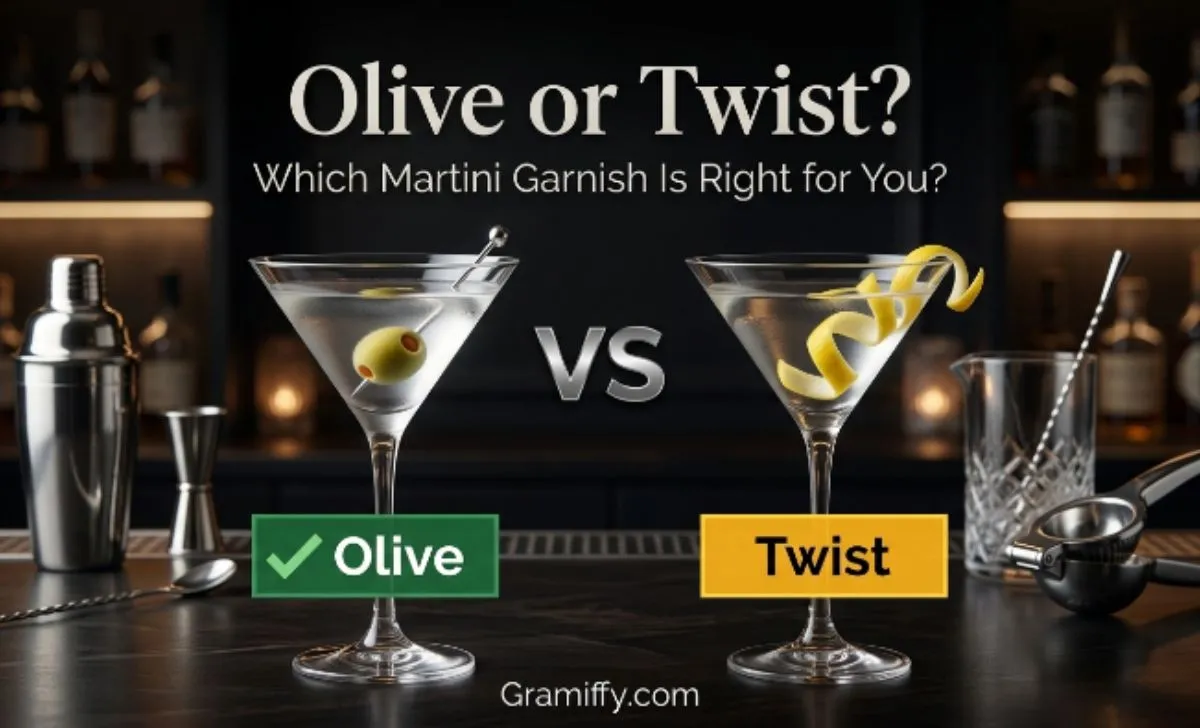
Olive Example
A classic gin martini with a green olive delivers a richer and more savory character.
Twist Example
A dry martini with a lemon twist offers a cleaner and more aromatic finish.
What Does Olive or Twist Mean?
When a bartender asks “olive or twist?”, they are asking which garnish you would like in your martini.
Olive Meaning
An olive garnish usually consists of one or more green olives placed on a cocktail pick.
The olive adds:
- Briny flavor
- Salty notes
- Savory character
- Traditional cocktail appeal
Many people associate olives with a classic or dirty martini.
Twist Meaning
A twist refers to a strip of lemon peel that is twisted over the drink.
This releases natural citrus oils into the cocktail.
A lemon twist adds:
- Fresh citrus aroma
- Bright flavor
- Subtle acidity
- Elegant presentation
The History of Martini Garnishes
The olive-versus-twist debate has existed for decades.
Early Martini Traditions
The martini became one of the most famous cocktails in the world during the late nineteenth and early twentieth centuries.
As cocktail culture evolved, bartenders experimented with different garnishes.
Over time, two options became dominant:
- Green olives
- Lemon twists
Today, these remain the most common martini garnishes in cocktail bars worldwide.
Why the Debate Continues
The garnish significantly changes how a martini tastes and smells.
Because taste preferences vary, people continue to debate which option creates the perfect martini.
Olive vs Twist: Key Differences
Understanding the differences can help you order with confidence.
Comparison Table
| Feature | Olive | Twist |
|---|---|---|
| Flavor | Salty and briny | Fresh and citrusy |
| Aroma | Mild savory notes | Strong citrus aroma |
| Best For | Dirty martinis | Dry martinis |
| Appearance | Traditional | Elegant |
| Mouthfeel | Richer | Lighter |
| Popular With | Savory drink lovers | Citrus lovers |
What is the difference between an olive and a twist in a martini?
An olive adds a salty, briny flavor to the martini, while a lemon twist contributes fresh citrus aroma and brightness. The choice depends on whether you prefer savory or citrus-forward flavors.
Which Martini Works Best With an Olive?
Certain cocktails pair naturally with olive garnishes.
Dirty Martini
The dirty martini is the most famous olive-based martini.
Because olive brine is already part of the recipe, adding olives enhances the drink’s savory profile.
Vodka Martini
Many vodka martini drinkers prefer olives because vodka allows the garnish flavor to stand out.
Savory Cocktail Lovers
If you enjoy salty snacks, pickled foods, or umami flavors, an olive garnish may be your best choice.
Which Martini Works Best With a Twist?
Many bartenders recommend a twist for more traditional martinis.
Dry Martini
A dry martini often pairs beautifully with a lemon twist.
The citrus oils complement the botanicals found in gin.
Gin Martini
Premium gin martinis frequently use a twist because it enhances aromatic ingredients such as:
- Juniper
- Citrus botanicals
- Herbs
- Floral notes
Elegant Cocktail Presentation
Many fine dining restaurants and luxury hotel bars serve martinis with a twist because of its refined appearance.
Olive or Twist in Modern Cocktail Culture
Today’s cocktail scene embraces both options.
Cocktail Bars and Mixology Trends
Modern mixologists view garnishes as an important part of drink design.
A garnish influences:
- Aroma
- Flavor
- Presentation
- Drinking experience
As a result, bartenders often recommend a garnish based on the cocktail recipe rather than tradition alone.
Bartender Recommendations
Many experienced bartenders suggest:
- Olive for dirty martinis
- Twist for dry martinis
- Personal preference for everything else
How Flavor Changes With Each Garnish
The garnish affects more than appearance.
Olive Flavor Profile
Olives contribute:
- Saltiness
- Brininess
- Umami notes
- Rich texture
Common olive choices include:
- Green olives
- Spanish olives
- Stuffed olives
Lemon Twist Flavor Profile
A twist adds:
- Citrus oils
- Fresh aroma
- Bright acidity
- Clean finish
The result is often a lighter and more refreshing cocktail.
Olive or Twist in Everyday Situations
At a Cocktail Bar
If you’re unsure, ask the bartender which garnish complements the drink best.
Fine Dining Restaurants
Upscale restaurants often recommend twists for premium gin martinis.
Social Events
Olives remain a popular choice because many people recognize them as the traditional martini garnish.
Home Bartending
Experimenting with both garnishes is the best way to discover your preference.
Common Mistakes When Choosing a Martini Garnish
Many people misunderstand the purpose of garnishes.
Frequent Errors
- Assuming one garnish is always correct
- Ordering a dirty martini with a twist expecting an olive flavor
- Ignoring the cocktail recipe
- Choosing based only on appearance
Better Approach
Consider:
- The base spirit
- Your flavor preferences
- The cocktail style
- The bartender’s recommendation
Olive or Twist: Which Should You Choose?
Choose an Olive If You Like:
- Savory flavors
- Salty foods
- Dirty martinis
- Rich cocktails
Choose a Twist If You Like:
- Citrus flavors
- Fresh aromas
- Dry martinis
- Light cocktails
For First-Time Martini Drinkers
A lemon twist is often a safe starting point because it highlights the spirit without adding saltiness.
FAQs
What does olive or twist mean?
It refers to the garnish choice for a martini. You can choose either an olive or a lemon twist.
Is an olive or twist more traditional?
Both are traditional martini garnishes and have been used for decades.
Which garnish is best for a dirty martini?
An olive is generally considered the best garnish for a dirty martini.
Why do bartenders use a lemon twist?
A lemon twist releases citrus oils that enhance aroma and flavor.
Is a twist healthier than an olive?
Both are used in small amounts, so nutritional differences are minimal.
Do gin martinis usually come with a twist?
Many classic gin martinis are served with a lemon twist.
Can I order both an olive and a twist?
Yes. Some bartenders can accommodate both garnishes if requested.
Which garnish do most bartenders recommend?
Many bartenders recommend olives for dirty martinis and twists for dry martinis.
Conclusion
The answer to olive or twist ultimately comes down to personal taste. An olive creates a savory, briny, and traditional martini experience, while a lemon twist delivers fresh citrus aroma and a lighter finish.
Neither garnish is universally better. Instead, each complements different cocktail styles and flavor preferences.
Whether you’re ordering a gin martini, vodka martini, dry martini, or dirty martini, understanding the role of the garnish helps you enjoy the drink exactly as intended.
The next time a bartender asks, “Olive or twist?” you’ll know exactly how to answer.
Read More Posts:
- Aisle or Isle: The Correct Spelling Explained With Easy Examples
- Scarry or Scary? Which Spelling Should You Use in 2026?