Have you ever written leasee because it seems like the obvious spelling of someone who takes a lease? It certainly looks logical: lease + -ee. But English has a small spelling trap here.
The standard English word is lessee.
A lessee is a person or organization that receives the right to use property or another asset under a lease. In everyday language, a lessee is often called a tenant or renter. (Cambridge Dictionary)
Leasee is not the standard spelling used in major English dictionaries for this legal and property term. So if you are writing a lease agreement, business document, article, or formal email, choose lessee.
Quick Answer: Is It Leasee or Lessee?
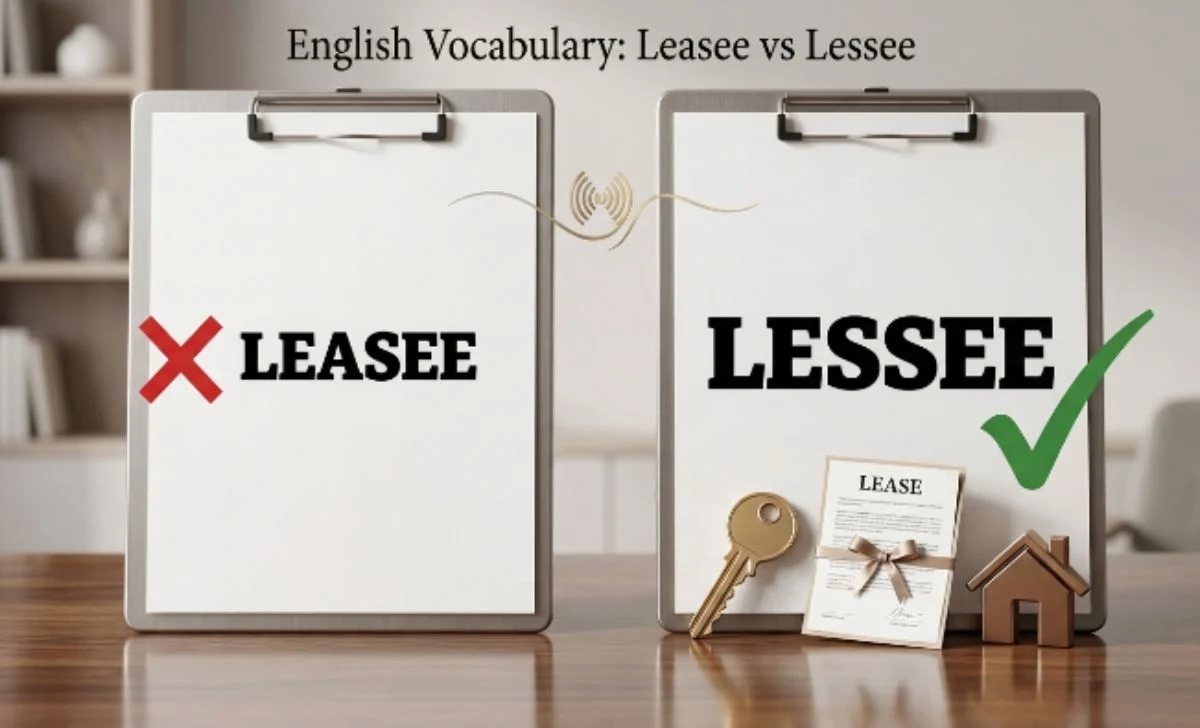
The correct standard spelling is:
Lessee ✅
The commonly mistaken spelling is:
Leasee ❌
Lessee means a person or organization that has the right to use property or another asset under a lease. (Cambridge Dictionary)
Example
The lessee must pay rent according to the agreement. ✅
Not:
The leasee must pay rent according to the agreement. ❌
| Word | Standard English? | Meaning |
|---|---|---|
| lessee | Yes | Person or organization receiving a lease |
| leasee | No, as the standard term | Common misspelling of lessee |
What Does Lessee Mean?
Lessee is a noun used especially in legal, property, and business contexts.
It means a person or organization that receives the right to use something under a lease. This can include a house, apartment, office, land, vehicle, or equipment. (Cambridge Dictionary)
For example:
Maria is the lessee of the apartment.
This means Maria has the legal right to use the apartment under the lease.
A company can also be a lessee:
The company became the lessee of the commercial building.
In ordinary conversation, tenant or renter is often more natural.
Why Is “Leasee” So Tempting?
This is where the spelling becomes confusing.
English has many words ending in -ee that refer to a person who receives an action or benefit:
- employee
- trainee
- interviewee
- nominee
- payee
So it is easy to reason:
lease + ee = leasee
But the established English word is:
lessee
The spelling comes from the historical development of the word rather than a simple modern lease + -ee construction. Oxford traces lessee to Old French lesse, related to lesser, meaning “to let” or “leave.” (Oxford Learner’s Dictionaries)
How Do You Pronounce Lessee?
Lessee is pronounced:
/lesˈiː/
It sounds roughly like:
less-EE
The stress falls on the second syllable.
Cambridge gives the same pronunciation for both British and American English. (Cambridge Dictionary)
Break it down
les + see
les-SEE
This pronunciation can sometimes make the spelling even more confusing because the final -see sound is not enough to tell you how the word is spelled.
Lessee vs. Lessor: Don’t Mix Them Up
One of the most important distinctions is between lessee and lessor.
They describe opposite sides of a lease.
Lessee
The lessee receives the right to use the property.
The lessee pays rent.
Lessor
The lessor is the person or organization that grants the lease, usually the owner or landlord.
The lessor owns the property.
Think of it this way:
Lessor = gives the lease
Lessee = gets the lease
Comparison
| Term | Role |
|---|---|
| Lessor | Person/entity granting the lease |
| Lessee | Person/entity receiving the lease |
| Tenant | Common term for a lessee of property |
| Landlord | Common term for the owner/lessor of rented property |
Cambridge specifically compares lessee with lessor, while Merriam-Webster defines a lessee as someone who holds property under a lease. (Cambridge Dictionary)
Lessee and Tenant: Are They the Same?
They are closely related, but lessee is more formal and legal.
A tenant is commonly someone who rents or occupies property.
A lessee is the person or organization legally receiving the right to use something under a lease.
For example:
John is the tenant of the apartment.
John is the lessee named in the lease agreement.
Both can refer to John, but lessee is more likely to appear in a formal contract.
Lessee as a Singular Noun
Lessee is a countable noun.
Singular:
lessee
Plural:
lessees
Example:
The lessee signed the contract.
Plural:
All lessees must follow the building regulations.
| Number | Correct form |
|---|---|
| Singular | lessee |
| Plural | lessees |
Dictionary sources list lessees as the plural form. (Dictionary.com)
What Is the Plural of Lessee?
The plural of lessee is:
lessees ✅
Example:
The property owner contacted all lessees.
Do not write:
lessee’s ❌
unless you mean possession.
For example:
The lessee’s responsibility is clearly stated.
Here, lessee’s means something belonging to the lessee.
Word Origin of Lessee
Lessee has a long legal history.
Oxford traces the word to the late 15th century, from Old French lesse, the past participle of lesser, meaning “to let” or “to leave,” combined with -ee. (Oxford Learner’s Dictionaries)
Merriam-Webster also traces lessee through Middle English and Anglo-French, with its first known use dating to the 15th century. (Merriam-Webster)
So the modern spelling lessee is not simply a casual spelling of leasee. It reflects the historical development of the word.
Lessee in American and British English
Lessee is standard in both American and British English.
There is no American/British spelling difference such as:
color / colour
or
organize / organise
Both varieties use:
lessee
The meaning is also essentially the same: a person or organization receiving the right to use something under a lease. (Cambridge Dictionary)
| English variety | Correct spelling | Meaning |
|---|---|---|
| American English | lessee | Person/entity under a lease |
| British English | lessee | Person/entity under a lease |
| Canadian English | lessee | Person/entity under a lease |
| Australian English | lessee | Person/entity under a lease |
Grammar Rules for Using Lessee
Because lessee is a noun, it can appear in several grammatical structures.
Lessee as the subject
The lessee is responsible for maintaining the property.
Lessee as the object
The landlord contacted the lessee.
Possessive form
The lessee’s obligations are listed in the contract.
Plural form
The lessees received copies of the agreement.
Plural possessive
The lessees’ rights were explained in the document.
Notice the difference:
- lessee = one person/entity
- lessee’s = belonging to one lessee
- lessees = more than one
- lessees’ = belonging to multiple lessees
Common Mistakes With Lessee
Mistake 1: Writing Leasee
❌ The leasee signed the agreement.
✅ The lessee signed the agreement.
This is the most common spelling problem.
Mistake 2: Confusing Lessee With Lessor
❌ The lessee is the property owner.
Usually, the owner granting the lease is the lessor.
✅ The lessor owns or grants the property.
Mistake 3: Using Lessee’s for the Plural
❌ The lessee’s must pay rent.
✅ The lessees must pay rent.
The apostrophe changes the grammatical meaning.
Mistake 4: Writing Lessee’s When You Mean Possession
The lessee’s responsibilities are listed below. ✅
Here, the apostrophe is correct because the responsibilities belong to the lessee.
Everyday and Professional Examples
Property
The lessee rented the apartment for two years.
Commercial property
The lessee operates a restaurant in the building.
Vehicles
The lessee is responsible for returning the vehicle in good condition.
Equipment
The company is the lessee of the machinery.
Legal documents
The lessee agrees to comply with all terms of the lease.
Multiple tenants
The lessees received written notice.
Lessee in a Lease Agreement
You will often see lessee in formal lease language.
For example:
The lessee agrees to pay the monthly rent on time.
Or:
The lessee shall maintain the premises in good condition.
This formal terminology helps distinguish the two parties:
Lessor → grants the lease
Lessee → receives the lease
That distinction is especially important in contracts.
Synonyms for Lessee
Depending on the context, possible synonyms include:
- tenant
- renter
- leaseholder
- occupant
- renter under a lease
Tenant is usually the simplest everyday alternative.
Leaseholder can be useful when emphasizing the person’s legal interest in a lease.
Cambridge lists leaseholder as a synonym for lessee. (Cambridge Dictionary)
Antonyms and Related Terms
There is no perfect antonym for lessee in every situation, but the most important contrasting term is:
lessor
The relationship can be remembered as:
Lessor → gives the lease
Lessee → receives the lease
Other related terms include:
- landlord
- tenant
- lease
- leaseholder
- property owner
- renter
A Simple Memory Trick
Here’s the easiest way to remember the spelling:
LESSEE = the one who gets the LEASE
Notice the beginning:
LESsee
not:
LEASee
Another useful trick is to remember the pair:
LESSOR gives
LESSEE gets
If you are the person renting under a lease, you are the lessee.
Leasee or Lessee: Comparison Table
| Feature | Leasee | Lessee |
|---|---|---|
| Standard English term | No | Yes |
| Correct legal spelling | No | Yes |
| Meaning | — | Person/entity receiving a lease |
| Pronunciation | Often intended as “lessee” | /lesˈiː/ |
| Plural | — | lessees |
| Common mistake | Yes | No |
| Formal writing | Avoid | Use |
Practice Exercise
Choose leasee, lessee, lessor, or lessees.
1. The _____ signed the rental agreement.
2. The property owner is the _____.
3. Several _____ attended the meeting.
4. Is “leasee” the standard spelling?
5. The _____ must pay rent according to the contract.
Answers
- lessee
- lessor
- lessees
- No
- lessee
FAQs
Is it leasee or lessee?
The standard English spelling is lessee. It means a person or organization that receives the right to use something under a lease. (Cambridge Dictionary)
Is leasee a correct word?
Leasee is not the standard spelling of the legal/property term. In formal English, use lessee.
What does lessee mean?
A lessee is a person or organization that has the right to use property or another asset under a lease. (Cambridge Dictionary)
What is the difference between lessee and lessor?
The lessee receives the lease and uses the property. The lessor grants the lease, usually as the owner or landlord.
Is a lessee the same as a tenant?
In many property situations, yes. Tenant is the more common everyday term, while lessee is more formal and legal.
What is the plural of lessee?
The plural is lessees. (Dictionary.com)
How do you pronounce lessee?
It is pronounced /lesˈiː/, approximately “less-EE.” (Cambridge Dictionary)
Is lessee used in both American and British English?
Yes. Lessee is standard in both American and British English. (Cambridge Dictionary)
Why is lessee not spelled leasee?
The word developed historically from Anglo-French and Old French rather than simply being formed from the modern spelling lease + -ee. (Merriam-Webster)
Who is the lessee in a rental agreement?
The lessee is the person or organization receiving the legal right to use the property under the lease.
Who is the lessor?
The lessor is the person or organization granting the lease, typically the owner or landlord.
Can a company be a lessee?
Yes. A company or other organization can be a lessee if it holds a lease for property, equipment, vehicles, or another asset. (Cambridge Dictionary)
Is lessee a legal term?
Yes. Dictionaries identify lessee as a legal/property term. (Cambridge Dictionary)
What is the easiest way to remember lessee?
Remember:
LESSEE gets the lease.
LESSOR gives the lease.
Conclusion: Leasee or Lessee?
If you’re wondering whether to write leasee or lessee, choose:
LESSEE ✅
Leasee is an understandable spelling mistake, but lessee is the established standard term used in legal, property, and business English.
A lessee is the person or organization receiving the right to use something under a lease. The person or organization granting that lease is the lessor. (Merriam-Webster)
The easiest memory trick is:
LESSEE gets the lease.
LESSOR gives the lease.
Once you remember that pair, this tricky spelling becomes much easier to get right.
Read More:

Hi, I’m Safdar Ali, an English language teacher with 26 years of teaching experience. My expertise is in English linguistics, grammar, and the differences between British and American English.
Through Gramiffy, I share practical, research-based guides to help students, writers, and English learners improve their language skills. My goal is to make English simple, accurate, and easy for everyone to understand.